Quick Answer
To get a new construction mortgage in Florida, first determine whether you’re buying a builder-owned home or financing a custom build. Next, confirm your budget, get preapproved, choose the right financing, and complete the property, insurance, and closing requirements.
Whether you’re choosing a floor plan in a Tampa suburb or building on land near Ocala, buying a newly built home can be exciting. But the financing process depends on who owns the lot, who pays the builder, and when you’ll take ownership. Understanding those details before signing a contract can protect both your deposit and your budget.
A Personal Story
I recently worked with a Florida buyer who’d saved carefully for a down payment and felt ready to shop. Once we included realistic property taxes, homeowners insurance, and closing expenses, the original target price left very little breathing room. We adjusted the numbers before the buyer made an offer, rather than discovering the problem at closing.
That experience reinforced advice I give anyone considering new construction. Don’t base your budget on the advertised home price alone. Lot premiums, upgrades, association fees, Community Development District assessments, and future property taxes all matter. I want buyers to feel comfortable with their payments long after they receive the keys.
What Counts as a New Construction Mortgage in Florida?
A new construction mortgage finances either the purchase of a newly built property or the construction of a home you’ll own.
These purchases fall into 2 main categories. If a developer builds and owns the house until closing, you generally arrange a standard purchase mortgage, even if you sign the contract months before completion. If you own the lot and hire a contractor to build, you may need a construction loan that releases funds as work progresses.
The market makes careful budgeting especially important. According to Florida Realtors’ September 2026 housing report, the median sale price for existing Florida single-family homes was $415,000, up 1.2% from a year earlier. That’s a market benchmark, not the price of a new home. Prices and special assessments can vary considerably between communities.
Which Mortgage Works for Your Type of New Home?
The best financing depends on whether you’re purchasing a finished home, waiting for a builder to finish one, or paying for construction yourself.
Financing Options at a Glance
| Your Situation | Typical Financing | Important Detail |
|---|---|---|
| Builder’s completed home | Conventional, FHA, VA, or USDA purchase loan | Closing follows required property approval |
| Builder’s home still underway | Purchase mortgage with a future closing date | Ask about rate locks and construction delays |
| Custom home on your land | Construction-to-permanent or construction-only loan | Budget for inspections and construction draws |
| Higher-priced new home | Jumbo mortgage | Credit, reserves, and down payment may differ |
With our conventional mortgage options, we can review financing for qualifying newly completed homes, along with other available purchase programs. Construction financing is different. Fannie Mae’s 2026 guidelines explain how an eligible single-closing construction-to-permanent loan can convert to a long-term mortgage after completion. Availability and requirements depend on the specific program.
How Financing Changes During Construction
| Stage | Builder-Owned Purchase | Buyer-Funded Custom Build |
|---|---|---|
| Before work begins | Purchase contract and financing plan | Land, plans, builder, and construction approval |
| During construction | Builder funds and oversees the work | Funds released through approved draws |
| When home is complete | Purchase mortgage closes | Loan converts or permanent financing closes |
How Do You Get Preapproved Before Signing a Builder Contract?
Start by verifying your income, credit, savings, and estimated monthly payment before committing to a home or lot premium.
Gather recent pay statements, tax documents when applicable, bank statements, and a breakdown of current debts. Ask the builder for the full contract price, upgrade costs, deposit schedule, expected completion date, and any financing restrictions. Those documents help us compare the right purchase options instead of guessing from an advertised base price.
We offer Greenlight+ verified preapproval for qualifying buyers, with income, assets, and credit reviewed upfront. Property approval and completion requirements still apply.
You can also test different price ranges with our Home Affordability Calculator, including estimated taxes, insurance, and HOA fees. Preparing your documents early is an important part of applying for a mortgage in Florida, especially when a builder sets firm contract deadlines.
How Much Down Payment Do You Need for a New Construction Mortgage in Florida?
Your down payment can range from 0% to 20% or more, depending on the mortgage program, your qualifications, and how the home is being built.
For a completed builder-owned home, conventional loans may allow as little as 3% down for eligible buyers. FHA loans generally start at 3.5%, while qualifying VA and USDA purchases can offer 0% down. Custom construction financing often requires more equity, which may include the value of land you already own.
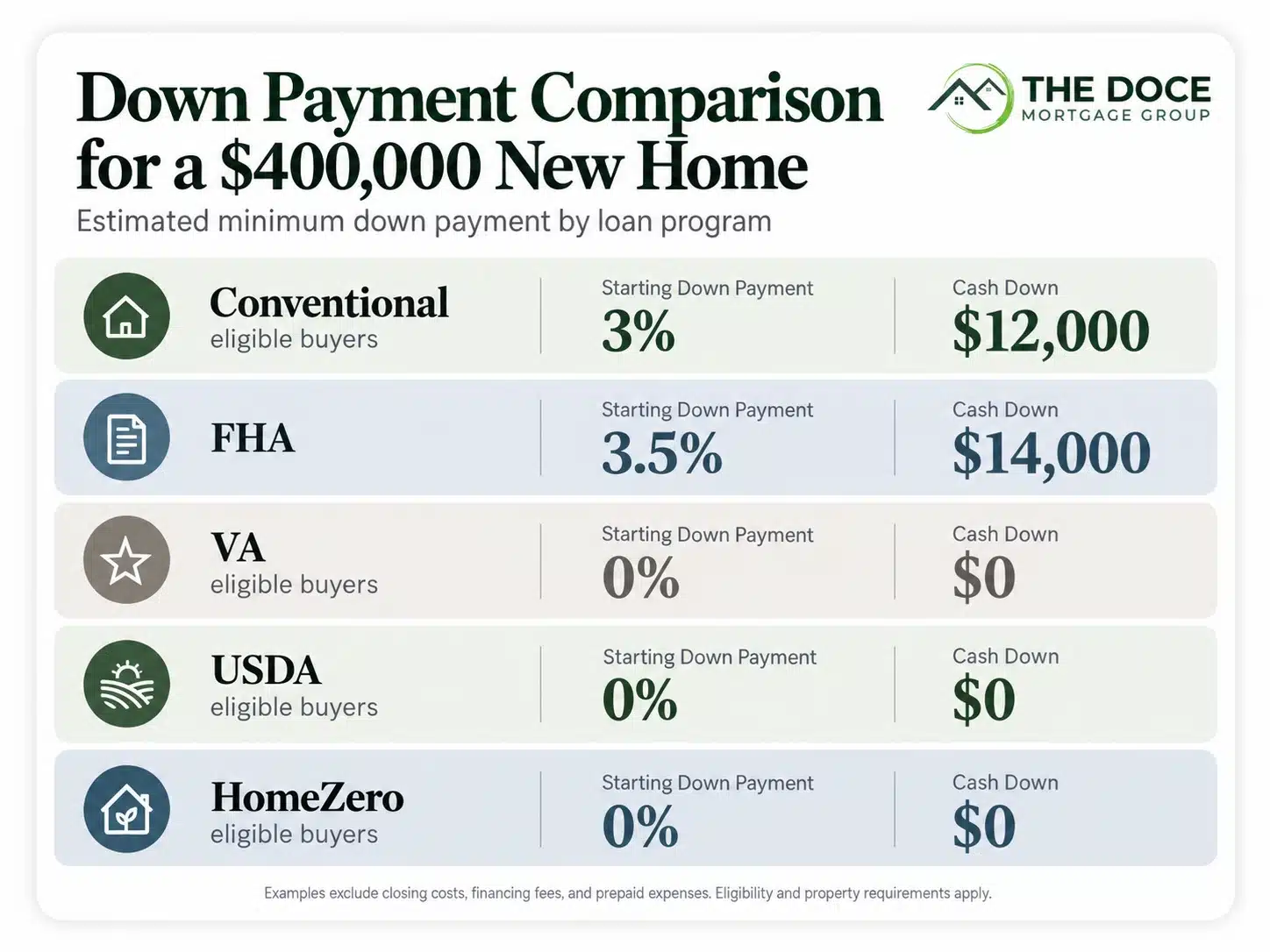
These examples exclude closing costs, financing fees, and prepaid expenses. Zero down doesn’t always mean zero cash needed at closing.
For buyers concerned about their savings, our HomeZero mortgage program offers qualifying purchases 100% financing through a first mortgage and a second loan that helps cover the down payment and certain closing costs. We’ll need to confirm that the completed new home and your financial situation meet the program’s requirements.
Can You Use FHA, VA, or USDA Loans for a Newly Built Home?
Yes, FHA, VA, and USDA loans can finance qualifying newly constructed homes, provided the property meets the applicable program requirements.
Each option serves different buyers:
- FHA loans: Our Florida FHA mortgage options can help buyers who have modest savings or less-than-perfect credit. The home must meet FHA property standards.
- VA loans: Our VA mortgage options offer eligible military borrowers 0% down and no monthly private mortgage insurance.
- USDA loans: Our USDA mortgage program supports qualifying purchases in eligible rural and suburban areas, with income and property restrictions.
Location matters, especially with USDA financing. Some developing communities outside Orlando, Jacksonville, and Tampa may qualify, while neighborhoods closer to urban centers may not.
I’ve found that comparing the complete monthly payment matters more than choosing a program based only on its advertised down payment. Mortgage insurance, funding fees, interest rates, and future property taxes can change which option makes the most sense.
What Additional Costs Should Florida New Construction Buyers Expect?
Beyond the purchase price, you should budget for closing expenses, insurance, taxes, builder upgrades, and potential community assessments.
Florida creates several costs that are easy to underestimate. A newly built home in Cape Coral may have different flood insurance needs than one in inland Clermont. Homes in planned communities around Tampa or Orlando may carry Community Development District assessments in addition to regular property taxes and HOA fees.
New Construction Expenses to Budget For
| Expense | What to Check |
|---|---|
| Closing costs | Title services, recording fees, prepaid expenses, and escrow deposits |
| Property taxes | Estimated assessment after construction, not just the vacant lot |
| Homeowners insurance | Windstorm coverage, deductibles, and replacement costs |
| Flood insurance | Flood-zone designation and financing requirements |
| HOA and CDD fees | Monthly, annual, and special assessments |
| Builder upgrades | Lot premiums, finishes, appliances, and landscaping |
One issue I regularly emphasize is that Florida property taxes can change significantly after a home purchase. If the builder’s estimate is based on an undeveloped parcel, the eventual tax bill could be much higher.
We can help you estimate these expenses before you commit. You can also get a free mortgage quote to compare financing options using your expected total purchase price.
How Do Construction-to-Permanent Loans Work?
Construction-to-permanent loans can combine financing for building a custom home with the mortgage you’ll use after construction ends.
During construction, funds are generally released in stages called draws. These payments correspond to completed work, such as the foundation, framing, roofing, and interior finishes.
Some programs require interest-only payments during construction. Others have different payment arrangements. Once the home is completed and approved, a single-closing loan converts into its permanent mortgage terms.
A construction-only loan works differently because you’ll usually need separate permanent financing afterward.
The important questions are whether the program allows 1 closing or 2, how it handles cost overruns, and what happens if construction takes longer than expected. Construction financing availability must be confirmed separately from our standard purchase mortgage programs.
How Can You Avoid Delays and Negotiate a Better Deal?
You can reduce financing surprises by confirming the builder’s completion schedule, rate-lock terms, appraisal requirements, and available incentives before signing.
There’s a reason to negotiate. According to the National Association of Home Builders’ October 2026 survey, 43% of builders nationwide reduced prices, while 65% offered sales incentives.
That doesn’t guarantee a discount on your Florida property, but it gives you a reason to compare offers. A temporary interest-rate buydown or closing-cost credit may be more valuable than free upgrades, depending on the numbers.
Before closing, confirm the certificate of occupancy, final appraisal, insurance coverage, title work, and inspection requirements. Also check what happens if construction runs beyond your mortgage rate-lock expiration.
When you’re ready to move forward, you can submit your documents through our secure mortgage application portal. We’ll review your financing qualifications and coordinate the mortgage process around the builder’s expected completion date.
What Are the Pros and Cons of Buying New Construction in Florida?
New construction offers modern features, energy efficiency, and fewer immediate repairs, but higher upfront expenses and construction delays can create challenges.
Many Florida buyers appreciate being able to choose finishes, floor plans, and energy-efficient features. Newer building codes can also improve wind resistance, although actual insurance savings depend on the property’s construction and location.
However, builder upgrades, landscaping, window treatments, and unexpected delays can increase your total investment.
New Construction Pros and Cons Chart
| Advantages | Potential Drawbacks |
|---|---|
| Modern layouts and updated building codes | Higher prices in some communities |
| New appliances and major systems | Landscaping and upgrades may cost extra |
| Builder warranties on certain components | Construction delays can affect closing |
| Potential energy and insurance savings | HOA fees and CDD assessments |
| Fewer immediate maintenance concerns | Limited negotiation on certain contracts |
I encourage buyers to compare the total cost of ownership rather than assuming newer automatically means more affordable. A beautiful home isn’t necessarily a good financial decision if the monthly expenses stretch your budget.
Myths vs Facts About New Construction Mortgages
Several common misunderstandings can cause buyers to overlook financing options or underestimate costs.
- Myth: You must use the builder’s preferred mortgage provider. Fact: Buyers can generally compare financing options, although some builder incentives may require a particular financing arrangement.
- Myth: Every newly built home requires a construction loan. Fact: Builder-owned homes often qualify for standard purchase mortgages.
- Myth: New homes don’t need inspections. Fact: Independent inspections can uncover defects before closing.
- Myth: Property taxes will remain at the builder’s advertised amount. Fact: Taxes can increase significantly after the completed property is assessed.
Which Common Mistakes Can Delay Your Closing?
The most common mistakes involve changing your finances, overlooking property requirements, and failing to prepare for construction delays.
Avoid these problems:
- Opening new credit accounts before closing
- Making large purchases that increase monthly debt
- Missing deadlines for insurance documentation
- Assuming the builder’s completion date is guaranteed
- Failing to review deposit and cancellation terms
- Overlooking mortgage closing costs in Florida
Mortgage rate changes are another concern. According to Freddie Mac’s October 15, 2026 mortgage survey, the average 30-year fixed mortgage rate was 7.40% nationwide.
That figure isn’t a personalized rate quote, but it shows why buyers should understand rate-lock expiration dates. If your home won’t be finished for several months, ask about extended locks, possible extension fees, and whether updated financial documents will be required.
Key Facts
- Completed builder-owned homes generally qualify for traditional purchase financing
- Custom construction financing often requires builder approval and staged payments
- Conventional, FHA, VA, and USDA options have different eligibility requirements
- Builder credits can reduce certain closing expenses, subject to program limits
- Florida property taxes and insurance can substantially affect monthly payments
- Preapproval doesn’t guarantee final mortgage approval
How Can We Help You Finance Your New Florida Home?
At The Doce Mortgage Group, we help Florida buyers understand their financing choices before they commit to a newly built home. Whether you’re purchasing from a developer in Orlando, exploring new communities near Tampa, or considering a property in South Florida, we’ll review your qualifications and compare the mortgage programs available for your situation.
Our goal is to help you understand your actual monthly payment, cash requirements, and closing timeline. We also want you to feel confident about the long-term affordability of your home.
We’re proud that The Doce Mortgage Group recently received the prestigious WalletHub Award and was recognized as one of the best mortgage brokers in several cities throughout Florida. You can also see what our clients have experienced through our customer reviews.
If you’re considering a new construction mortgage in Florida, we’re ready to help you evaluate your options and move forward with confidence. When you’re ready, you can Get Started Now, or connect with a loan officer live at 305-661-3434.