
Quick Answer
Buying a Florida condo or townhome can be smart if you want less exterior maintenance and shared amenities. The right decision depends on the full monthly cost, community rules, privacy, association finances, insurance, and available mortgage options.
Buying a condo or townhome in Florida can offer convenience and a lower purchase price than some detached homes, but you’re also joining a shared community. You need to understand what you own, what the association controls, and the complete monthly cost.
A Personal Story from Alex
I once helped a Miami client obtain her first mortgage for a new condo. She needed guidance at every step, from understanding the paperwork to knowing which questions mattered before closing. What first looked like a simple unit purchase became easier once we separated her personal financing from the building and association details that also needed attention.
That experience reinforced a lesson I share with buyers today. Don’t judge a condo in Florida only by the kitchen, view, or amenities. Review the community with the same care you use to inspect the unit. A well maintained home inside a financially weak association can still create expensive problems later.
What Is the Real Difference Between a Florida Condo and a Townhome?
The real difference is usually the legal ownership structure, not simply how the property looks.
With a condo, you generally own the interior unit and share an interest in common areas such as the roof, hallways, elevators, pool, grounds, and exterior walls. With a townhome, you often own the structure and land beneath it, although some townhomes are legally organized as condominiums.
That means 2 attached properties that look alike may have different maintenance duties and financing requirements. The listing description isn’t enough. The declaration, deed, association documents, and insurance responsibilities show what you actually own.
The Doce Mortgage Group’s explanation of townhouse and condo differences shows how land ownership and association responsibility can vary.
| Feature | Condo | Townhome | Detached Home |
| Land ownership | Usually shared | Often individually owned | Individually owned |
| Exterior maintenance | Usually association managed | Varies | Owner managed |
| Shared walls | Common | Common | None |
| Association dues | Common | Common | Sometimes |
| Privacy | Usually lower | Moderate | Usually highest |
Ask who maintains the roof, windows, exterior walls, plumbing lines, and landscaping. Those answers can reveal more than the property label.
Who Is Buying a Condo or Townhome Best For?
Buying a condo or townhome often works best for people who value convenience, location, and reduced exterior maintenance.
These properties may fit:
- First time buyers
- Retirees and seasonal residents
- Busy professionals
- Buyers who want shared amenities
- People who don’t want extensive yard work
- Buyers seeking urban or coastal locations
- Owners comfortable following community rules
They may be less appealing if you want maximum privacy, a large private yard, unrestricted parking, control over exterior changes, or freedom to rent without association limits.
I often tell buyers that low maintenance living is only a benefit when the rules match how they want to live. A pool and landscaping may sound ideal, but strict pet, parking, guest, or renovation rules can outweigh those benefits.
How Do HOA Fees and Special Assessments Affect Affordability?
HOA fees and special assessments can change both your monthly budget and the amount you may qualify to finance.
Regular dues may cover exterior maintenance, landscaping, amenities, security, water, cable, reserves, or part of the community’s insurance. Ask exactly what’s included and whether dues may increase.
Special assessments are separate charges for major repairs or expenses that regular dues and reserves can’t fully cover. They may be collected as a lump sum or monthly payments. Low dues aren’t always good news if the association has underfunded reserves or delayed repairs.
Full Monthly Cost Comparison Chart
| Monthly Cost Item | Condo Example | Townhome Example |
| Principal and Interest | $1,780 | $1,920 |
| Property Taxes | $260 | $290 |
| Unit Insurance | $95 | $125 |
| Flood Coverage | $40 | $25 |
| HOA Dues | $525 | $210 |
| Mortgage Insurance | $145 | $145 |
| Special Assessment Payment | $180 | $0 |
| Total Monthly Cost | $3,025 | $2,715 |
Florida’s statewide median condo and townhome price reached $305,000 in June 2026, while inventory stood at 8.1 months. That larger supply may give buyers more choices, but association costs still need to be included when comparing properties.
You can include HOA expenses with income, debts, taxes, insurance, and down payment using our Home Affordability Calculator. I recommend testing the full payment before deciding that a lower purchase price means a more affordable home.
Why Must the Association Qualify Too?
Condo financing often requires review of both your finances and the overall condominium project.
A condo unit is connected to the financial health, insurance, condition, and management of the entire community. Even when your credit, income, and down payment are strong, problems within the association can affect which mortgage options are available.
The project review may examine:
- The association’s operating budget
- Reserve funding for major repairs
- Master property and flood insurance
- Current or planned special assessments
- Pending litigation
- Delinquent association dues
- Owner occupancy levels
- Commercial space within the property
- Building inspection reports
- Major deferred maintenance
- Whether 1 person or company owns many units
Fannie Mae uses condo project information to evaluate whether a community meets its eligibility standards. Its condo questionnaire helps collect details about finances, insurance, assessments, litigation, building condition, and ownership. Fannie Mae’s condo project requirements reflect why the association review can be just as important as reviewing the individual buyer.
I’ve worked with Florida buyers who were surprised to learn that a beautiful unit inside a popular building could still present financing problems. That’s why I prefer to investigate the project before a buyer spends heavily on inspections, appraisals, and other transaction costs.
What Do Warrantable and Non-Warrantable Really Mean?
A warrantable condo generally meets mainstream project requirements, while a non-warrantable condo requires a different financing approach.
A project may be considered non-warrantable because of:
- Inadequate reserve funding
- Major pending litigation
- Insurance coverage concerns
- A large active special assessment
- Too many owners behind on dues
- Significant commercial space
- High investor concentration
- Unfinished construction
- Structural or maintenance concerns
- One owner controlling too many units
Non-warrantable doesn’t automatically mean the condo is a bad purchase. It means the property doesn’t currently fit certain standard project guidelines. Financing may still be available, but the down payment, pricing, documentation, and available terms can differ.
The Doce Mortgage Group offers Florida condo loan options for warrantable, non-warrantable, FHA approved, and VA approved communities. Its also important to understand what makes a condo warrantable vs non-warrantable. This can explain why 2 similar buildings can have very different financing paths.
Condo Project Risk Dashboard
| Review Area | Green Light | Yellow Light | Red Light |
| Reserves | Well funded | Increase planned | Major shortage |
| Insurance | Complete coverage | Renewal pending | Coverage gap |
| Assessments | None planned | Possible future work | Large active charge |
| Litigation | None | Minor dispute | Major structural claim |
| Inspections | Current | Due soon | Missing or serious findings |
| Delinquencies | Low | Increasing | Widespread |
How Do Florida Inspection and Reserve Rules Affect Buyers?
Florida inspection and reserve requirements can affect association dues, special assessments, project eligibility, and closing timelines.
A Structural Integrity Reserve Study, commonly called a SIRS, estimates the money needed for future repair or replacement of major building components. Florida generally requires these studies for qualifying condominium buildings that are 3 habitable stories or higher.
Florida’s condominium information resources explain that associations subject to these rules must evaluate major structural items and fund required reserves. Certain associations coordinating a SIRS with a milestone inspection have a deadline no later than December 31, 2026.
A milestone inspection and a SIRS aren’t the same thing. The milestone inspection examines structural condition. The reserve study examines expected repair costs and how much money should be set aside. They may sometimes be performed during the same period, but 1 doesn’t replace the other.
Completed reports aren’t automatically bad news. A documented repair plan with reasonable funding may be less concerning than missing reports, ignored maintenance, or an association that can’t explain how required work will be paid for.
My advice is simple, learn about an assessment before making the offer, not during final review when your choices are limited.
What Should You Review Before Making an Offer?
Before making an offer, review the unit, association finances, insurance, rules, inspections, and possible future expenses.
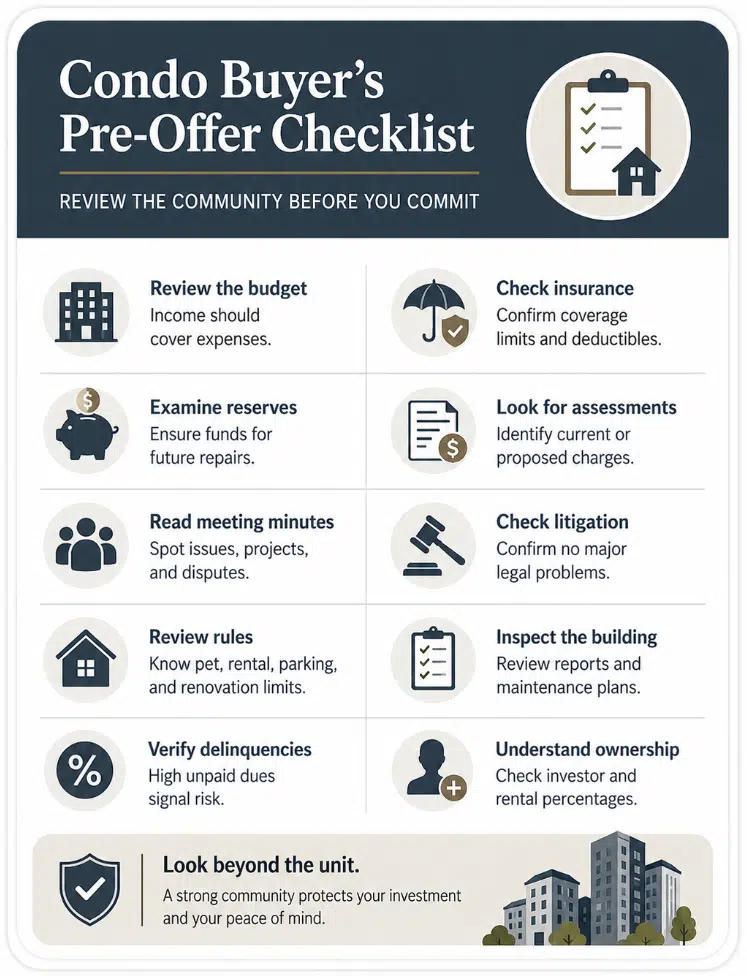
Ask these questions before becoming emotionally committed:
- What does the association maintain?
- Are dues expected to rise?
- Are special assessments planned or discussed?
- Who maintains the roof, windows, and exterior?
- Are pets, rentals, parking, or renovations restricted?
- Is the community eligible for your intended mortgage program?
- Are reserves adequate for upcoming work?
- Is major litigation pending?
- Can the association provide documents promptly?
When you have a community in mind, you can securely submit your information through our application portal so we can begin reviewing your financing options and the property details.
What Are the Pros and Cons?
The main benefits are reduced exterior maintenance, shared amenities, and access to desirable locations, while the main drawbacks are association costs, restrictions, and less control.
| Pros | Cons |
| Less exterior maintenance | Monthly association dues |
| Shared amenities | Community restrictions |
| Potentially lower purchase price | Special assessment risk |
| Access to popular locations | Shared walls and less privacy |
| Security and community services | Less control over major repairs |
| Lock and leave convenience | Association decisions affect owners |
| Landscaping may be included | Financing may require project review |
A benefit for 1 buyer can be a disadvantage for another. Someone who dislikes yard work may appreciate association managed landscaping. Someone who enjoys changing the exterior of a home may find the same arrangement restrictive.
The best decision depends on how well the property’s costs, rules, location, and maintenance responsibilities match your priorities.
Which Myths Vs Facts Matter Most?
Understanding a few common misconceptions can help you evaluate the property more accurately.
| Myth | Fact |
| A townhome is always financed like a detached home | Its legal ownership structure determines the review process |
| High HOA dues always mean poor management | Higher dues may include insurance, reserves, utilities, and amenities |
| Low HOA dues are always better | Low dues may leave too little money for major repairs |
| Preapproval means any condo can be financed | The condominium project may require separate review |
| An inspection report means the building is unsafe | Inspections help identify maintenance and funding needs |
| Condo ownership means no maintenance | Owners remain responsible for their units and certain repairs |
One lesson I’ve learned is that buyers often compare monthly dues without comparing what those dues include. A community charging more may have stronger reserves and fewer surprise expenses than one with unusually low fees.
What Common Mistakes Should You Avoid?
The most common mistakes involve focusing on the unit while overlooking the association, rules, and full monthly cost.
Avoid these problems:
- Looking only at the purchase price
- Ignoring HOA dues when setting a budget
- Confusing the building style with legal ownership
- Assuming the association handles every repair
- Failing to read recent meeting minutes
- Overlooking current or proposed assessments
- Ignoring insurance limits and deductibles
- Waiting too long to review project eligibility
- Assuming pet or rental rules are flexible
- Paying for amenities you won’t use
- Ignoring parking and vehicle restrictions
- Choosing a unit before examining the association
The most expensive surprises are often buried in documents that buyers assume are routine. Read the details before making a final commitment.
Key Facts
- Florida condo and townhome ownership structures can differ
- Some townhomes are legally organized as condominiums
- HOA dues count toward the complete monthly housing expense
- Special assessments can create substantial additional costs
- Condo financing may require review of the entire project
- Reserves help associations prepare for major repairs
- Low monthly dues don’t always indicate good financial management
- Insurance and flood exposure can affect affordability
- Community rules may limit pets, parking, rentals, and renovations
- The right choice depends on your finances and preferred lifestyle
How Can The Doce Mortgage Group Help You Choose Confidently?
We help buyers look beyond the unit and understand how the association, insurance, reserves, assessments, and ownership structure may affect financing. Our team can review warrantable and non-warrantable condo options, explain the full monthly payment, and help identify project concerns early.
For more than 38 years, Alex Doce has helped buyers work through both straightforward and complex mortgage situations. Our customer reviews reflect our focus on clear communication, careful preparation, and avoiding last minute surprises.
We were recently recognized by WalletHub as one of the best mortgage brokers in several cities throughout Florida. This recognition includes other respected professionals and doesn’t mean we were named the only best choice in the state.
When you’re ready to compare your Florida condo or townhome financing choices, you can get a free quote from our team.
When you’re ready to move forward, you can Get Started Now, or connect with a loan officer live at 305-661-3434.